

Cloth diapers and money
Are cloth diapers a gold mine?
Spara pengar med tygblöjor
Are you ready for some hard facts, cold facts, black-and-white facts about how much money you can save with cloth diapers?
If you Google "how many diapers does a child use," you'll find numbers ranging from 2000 to 10,000 diapers. That's a significant variation! Factors like how often a child poops and the age at which they become diaper-free influence these numbers. In Sweden, the average age for diaper independence has doubled in the last 50 years and is now around 3.5 years.

My Own Numbers
The following figures regarding the number of diapers per child are based on my own two diapered children, surveys from friends and online groups, and internet searches. While not a scientific study, these numbers are applicable to many families. Keep in mind that the total is based on the assumption that the child uses diapers every day for 3.5 years.
Löpande utgifter eller allt på en gång?
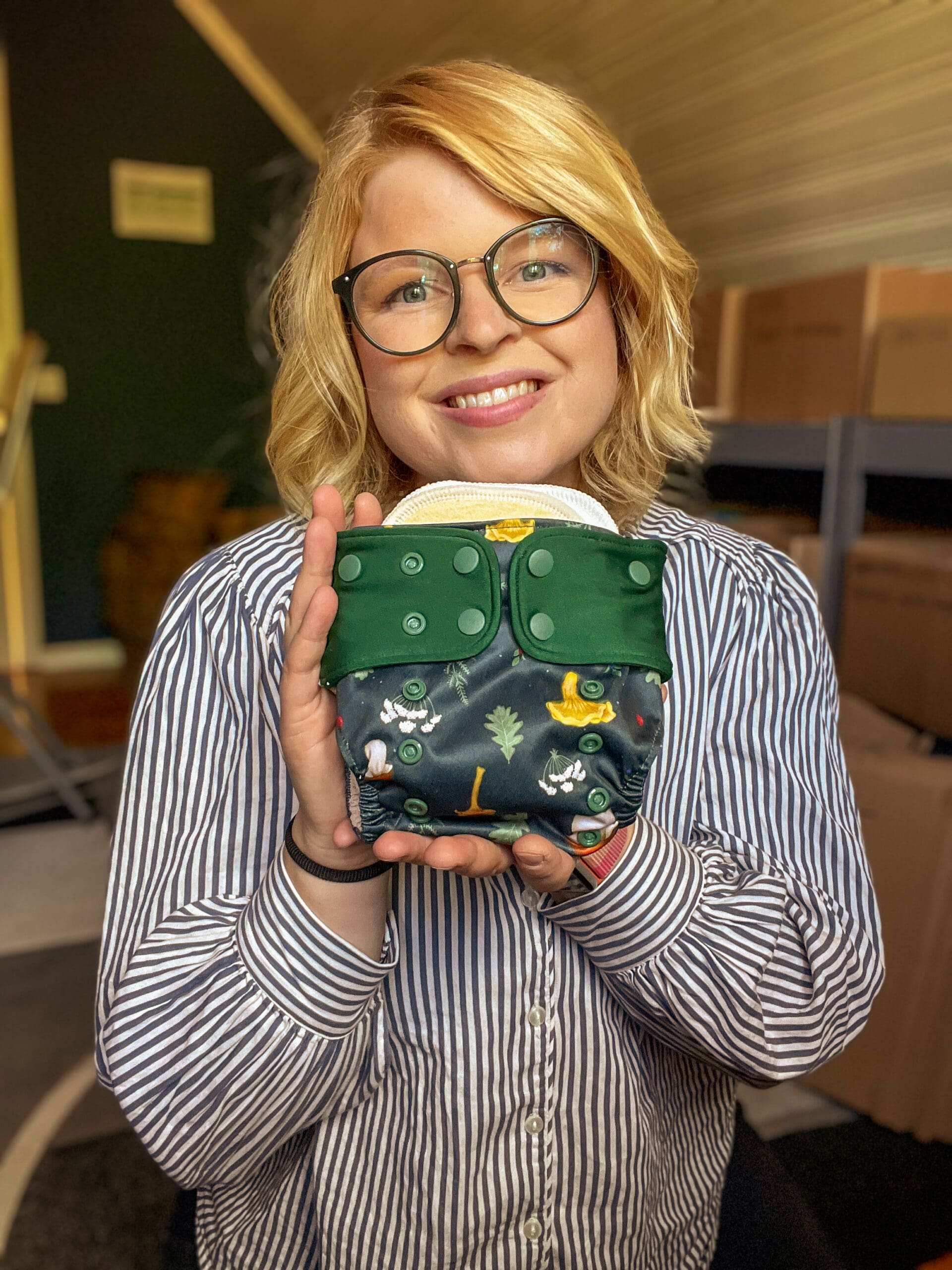
It's important to discuss the perception that cloth diapers are expensive. While the upfront cost may seem high, cloth diapers can last the entire diapering period with just one purchase. Cloth diapers come in One Size, fitting approximately 4-16 kilograms. In contrast, disposable diapers require changing sizes as the child grows.
How Many Diapers Does a Child Use?
Many new parents are shocked by how frequently diapers need changing for a newborn. Some babies poop all the time. It is not uncommon to change diapers 15-20 times a day during the first few weeks. Some change them less frequently, of course. We can estimate an average of 10 diapers a day for the first month. This decreases after the first few weeks and is very individual, but an average of eight diapers a day is usually calculated from the second month until the introduction of solid foods, around six months of age. After about one year, we reach an average of six diapers a day.
In Sweden, children, on average, use diapers until 3.5 years of age. Considering these figures, the total comes to: 8040 diapers.
Prices for Disposable Diapers
According to prices at Ica Maxi in Eskilstuna in January 2024, the average price for open diapers is 2.97 SEK/piece, and for pull-up diapers, it's 3.50 SEK/piece. The average price for these two categories is 3.23 SEK/diaper.
Om vi då tar 8040 blöjor gånger 3,23 kronor får vi fram att en total summa för engångsblöjor i
3,5 år är: 25 969 SEK.
This cost can of course be lower if you use discount coupons and special offers, or actively choose the lowest priced diapers. For example, if you only use ICA's own diapers, which are among the cheaper options, the average price per diaper is 2.12 kronor. Multiplying this by 8040 diapers gives us a total price of 17 044 SEK.
Costs for Cloth Diapers
Använder man pocketblöjor och har ett snitt på 8 blöjbyten per dag och vill tvätta var tredje dag krävs det alltså 24 blöjor. Man vill kanske ha ett par extra, för att täcka torkdag. 30 pocketblöjor brukar vara det antal man säger när man pratar om att ha pockets på heltid. Hos Green Poppy kostar en pocketblöja med två medföljande inlägg (alltså komplett) 239 kronor. Detta ger oss en total kostnad om 7170 kronor.
Detta innebär alltså att du med tygblöjor kan spara 18 799 kronor (!!!).
Even if you only use the cheaper disposable diapers, you can still save 9679 SEK! 9874 kronor .
Reuse Again and Again
Let’s say you have another child who uses diapers for the same amount of time. This would mean double the cost for disposable diapers, totaling 51,938 SEK. However, the cost for cloth diapers would not increase, as you can use the same diapers for at least two children. Detta blir då en besparing på 37 598 kronor.
Once the diapering period is over, and the children are diaper-free, there's a thriving second-hand market, and you can get back thousands of SEK for your used cloth diapers.
Yes, the upfront cost of buying cloth diapers may be higher, but you avoid continuously buying new diapers, and in the long run, there are many, many SEK to be saved.

 EN
EN  SV
SV